PVC vs PP Cooling Tower Fill: Which One Is Better?
PVC vs PP Cooling Tower Fill: Which One Is Better?
When choosing a cooling tower fill, many customers ask the same question: Should I choose PVC or PP material?
Both PVC cooling tower fill and PP cooling tower fill are widely used in industrial cooling towers. However, the right choice depends on your working conditions, water quality, temperature requirements, and expected service life.
In our experience as a cooling tower fill manufacturer, there is no single material that is always the best. The key is choosing the right cooling tower media for your specific system.
What Is Cooling Tower Fill and Why Does Material Matter?
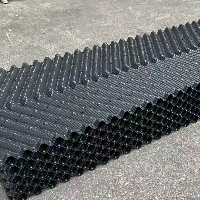
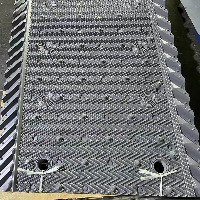
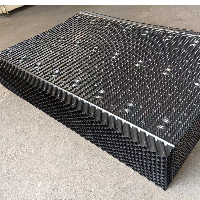
Cooling tower fill is the core heat transfer part inside a cooling tower. It increases the contact area between air and water, allowing better heat exchange.
A good film fill cooling tower design helps water spread evenly and creates a longer contact time between water droplets and airflow.
Whether it is PVC, PP, or another material, the quality of the tower fill directly affects cooling efficiency, energy consumption, and maintenance frequency.
PVC Cooling Tower Fill: A Popular Choice for Most Applications
PVC is one of the most commonly used materials for cooling tower fill.It has been widely applied in HVAC systems, industrial cooling towers, and replacement projects for many years.
Advantages of PVC Cooling Tower Fill
- Excellent heat transfer performance
- Good surface wettability for better water distribution
- Cost-effective solution for standard cooling applications
- Easy to manufacture into different corrugated fill designs
- Suitable for most counterflow and crossflow cooling towers
For normal operating temperatures and clean water conditions, PVC film fill is usually the first choice because it offers a good balance between performance and cost.
You can check our PVC solution here:PVC Cooling Tower Fill
PP Cooling Tower Fill: Better Performance in Difficult Conditions
PP (Polypropylene) cooling tower fill is often selected when the cooling system operates under more demanding conditions.
Compared with PVC, PP has better temperature resistance and stronger chemical resistance, making it suitable for applications where higher durability is required.
Advantages of PP Cooling Tower Fill
- Higher temperature resistance compared with PVC
- Better resistance to certain chemicals
- Longer service life in harsh environments
- Suitable for industrial cooling applications with higher requirements
For power plants, chemical industries, and systems with higher water temperatures, PP tower fill can be a better option.
Learn more about our PP cooling tower fill module:PP Cooling Fill Module
PVC vs PP Cooling Tower Fill: Main Differences
| Comparison | PVC Cooling Tower Fill | PP Cooling Tower Fill |
|---|---|---|
| Heat Transfer | Excellent for standard applications | Excellent, especially in demanding conditions |
| Temperature Resistance | Suitable for normal temperatures | Better for higher temperature applications |
| Chemical Resistance | Good | Better |
| Cost | More economical | Higher initial cost but longer durability |
| Common Applications | HVAC, commercial and industrial cooling towers | Power plants, chemical and special industrial systems |
How to Choose Between PVC and PP Cooling Fill?
Before selecting a cooling tower fill, we normally suggest checking these points:
- Operating water temperature
- Water quality and chemical content
- Cooling tower type
- Expected service life
- Maintenance conditions
For most replacement projects, PVC film fill is a practical and economical choice.For more challenging environments, PP cooling tower media can provide better long-term performance.
Why Choose Our Cooling Tower Fill?
We are a cooling tower fill manufacturer located in Shenzhen, China.We focus on producing high-quality film fill, corrugated fill, and customized tower fill solutions for global customers.
With flexible production capability, we support OEM orders according to your drawings, dimensions, materials, and project requirements.
- PVC, CPVC, and PP material options
- Customized sizes and designs
- OEM service for cooling tower manufacturers and distributors
- Experience in international cooling tower projects
Related Cooling Tower Fill Products
You may also be interested in:
Final Thoughts
PVC and PP cooling tower fills both have their own advantages.The better choice depends on your cooling system, operating conditions, and budget.
If you are replacing old tower fill or designing a new cooling tower project, choosing the right Cooling Tower Media at the beginning can help improve cooling performance and reduce future maintenance costs.