Counterflow vs Crossflow Cooling Tower Fill: Understanding the Difference Before Replacement
Although both types are used to improve heat transfer inside cooling towers, their structures and working principles are quite different. Choosing the wrong tower fill can affect cooling performance, airflow, and the overall efficiency of the cooling system.
Based on our experience producing Cooling Tower Fill for different projects, understanding the tower design is the first step before selecting the right Film Fill solution.
How Does Cooling Tower Fill Work?
Cooling tower fill is the main heat exchange component inside a cooling tower. It increases the contact area between water and air, allowing heat to transfer more efficiently.
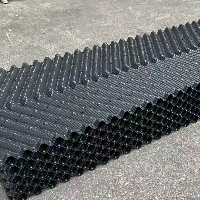
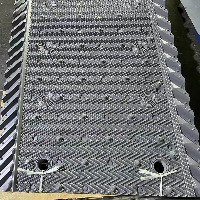
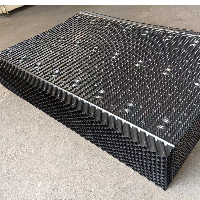
Most modern cooling towers use film fill cooling tower designs. The thin sheets are manufactured with special patterns, creating a large wet surface area while maintaining good airflow.
Different designs, such as Corrugated Fill and other structured tower fill types, are developed to improve water distribution, reduce air resistance, and maintain stable cooling performance.
The Main Difference Between Counterflow and Crossflow Cooling Tower Fill
The biggest difference between counterflow and crossflow cooling tower fill is the direction of airflow and water flow inside the cooling tower.
Counterflow Cooling Tower Fill
In a counterflow cooling tower, water flows downward from the top of the tower, while air moves upward from the bottom. The two flows move in opposite directions, creating efficient heat exchange.
Because air and water move against each other, counterflow cooling tower fill is designed to maximize contact time and heat transfer efficiency.
This type of tower fill is commonly used in industrial cooling systems, HVAC applications, and projects where high thermal performance is required.
Our counterflow cooling tower fill is available in different materials, including PVC, CPVC, and PP, with customized sizes for different cooling tower designs.
Learn more about our product:
Counterflow Cooling Tower Fill
Crossflow Cooling Tower Fill
In a crossflow cooling tower, air moves horizontally through the fill while water flows vertically downward. The airflow direction creates different requirements for the fill structure.
Crossflow cooling tower fill usually uses larger sheet designs with special Corrugated Fill patterns. These structures help distribute water evenly while allowing air to pass through smoothly.
For cooling tower replacement projects, matching the original fill size and design is especially important because crossflow towers often require larger fill sections.
Our crossflow cooling tower fill can be customized according to tower dimensions, material requirements, and project specifications.
Learn more about our product:
Common Problems When Replacing Cooling Tower Fill
Using the Wrong Fill Type
Counterflow and crossflow fills are not interchangeable in most applications. The airflow direction and tower structure must be considered before replacement.
Ignoring Material Selection
Different working environments require different materials. PVC is commonly used for standard applications, while CPVC and PP may be preferred for higher temperature or special chemical conditions.
Choosing Only Based on Price
Lower-cost Cooling Fill may not always provide the best long-term value. Fill quality, design, and service life are important factors for maintaining cooling performance.
Final Thoughts
Choosing between counterflow and crossflow cooling tower fill depends on understanding how your cooling tower works.
A suitable Film Fill solution can help improve heat transfer efficiency, maintain stable operation, and reduce future maintenance problems.
With manufacturing experience in Shenzhen, China, we provide customized Cooling Tower Media solutions for cooling tower manufacturers, contractors, and maintenance companies worldwide.
Need Cooling Tower Fill for Your Project?
We manufacture PVC, CPVC, and PP cooling tower fill with OEM customization support. Contact our team for product selection, technical support, and quotation.